What Is Psychosocial Hazard Training and Who Actually Needs It?
Stop me if you’ve heard this one before: A well-respected employee suddenly starts showing signs of burnout. The team’s morale dips. Productivity quietly drops. Yet, no one can pinpoint exactly what went wrong — there were no obvious safety incidents or breaches. It’s just… tension.
What you’re seeing isn’t a physical hazard. It’s a psychosocial one — and it’s costing your workplace more than you think.
In a time where mental health is rightly getting its seat at the boardroom table, psychosocial risks are now considered critical to workplace safety. But knowing what to do about them is where most organisations get stuck.
In this article, you’ll learn:
- What psychosocial hazards are and why they matter
- What psychosocial hazard training covers
- Who is legally and ethically responsible for managing these risks
- The kinds of professionals who benefit most from this training
Table of Contents
- What Are Psychosocial Hazards?
- The Business and Human Impact of Ignoring Them
- What Does Psychosocial Hazard Training Involve?
- Who Needs Psychosocial Hazard Training?
- How to Start Building Psychosocial Safety
What Are Psychosocial Hazards?
Psychosocial hazards are elements of work that can harm a person’s mental health and wellbeing. Unlike physical hazards, these aren’t wires on the floor or malfunctioning machinery. These are things like:
- High workloads with unrealistic deadlines
- Bullying, harassment, or poor interpersonal relationships
- Lack of role clarity
- Low job control or support
- Job insecurity or constant restructuring
According to Safe Work Australia, psychosocial hazards can cause psychological and physical harm. Left unaddressed, they contribute to mental health issues, burnout, workplace conflict, and high turnover.
The Business and Human Impact of Ignoring Them
Failing to manage psychosocial risks can result in more than just unhappy employees. Consider this:
- $543 million is the estimated cost of workplace mental health issues to Australian businesses every year
- 1 in 5 Australians will experience a mental health condition in any given year (AIHW)
- Psychological injury claims are growing — and tend to be more expensive and longer-lasting than physical injury claims
Beyond compliance, organisations have a moral obligation to foster safe workplaces. That’s where psychosocial hazard training comes in.
What Does Psychosocial Hazard Training Involve?
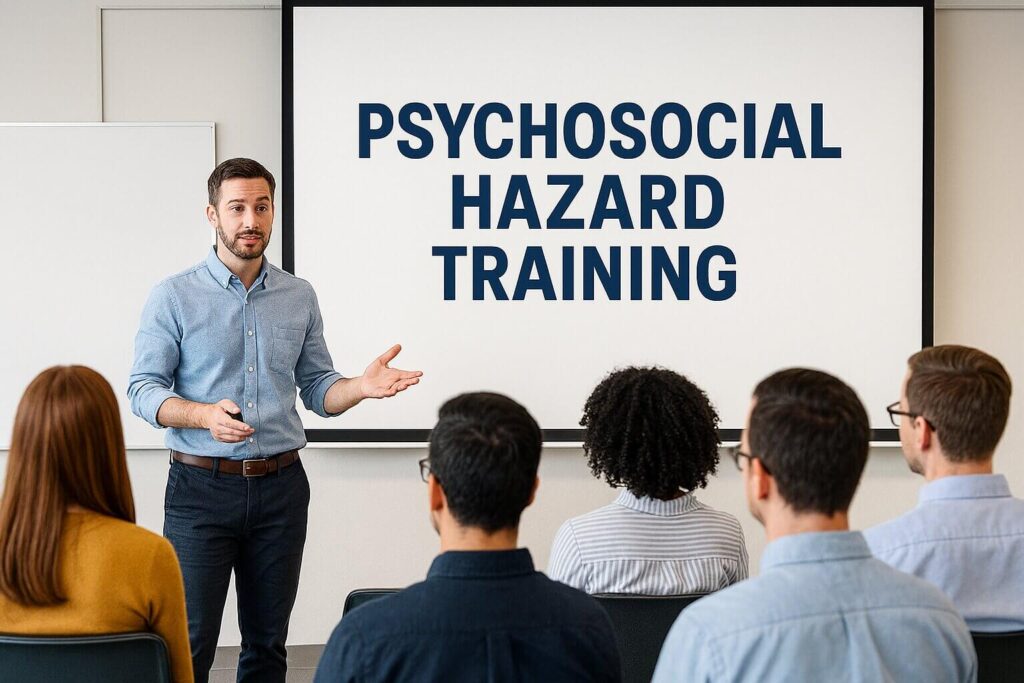
Psychosocial hazard training equips professionals with the skills to identify, manage, and prevent psychosocial risks at work. Depending on the training provider and level, it can include:
- Definitions and examples of psychosocial hazards
- Legal obligations under WHS laws
- Risk assessment and incident investigation
- Designing safer work practices and environments
- How to conduct trauma-informed interviews and engage with affected individuals
- Reporting obligations and continuous improvement strategies
For example, advanced courses like this one focused on investigating psychosocial events using ICAM are designed for professionals tasked with conducting or overseeing investigations into workplace incidents. These courses bring rigour and structure to an area that can feel deeply subjective without it.
Who Needs Psychosocial Hazard Training?
Not every employee needs this training — but many more roles do than most assume. Here’s who it’s ideal for:
Health and Safety Professionals
They’re legally required to understand and mitigate both physical and psychological hazards under WHS legislation.
HR Leaders and Managers
Psychosocial risks often stem from poor management practices. Training helps HR teams create policies that prevent issues before they escalate.
Incident Investigators
When a workplace event involves mental harm, investigations must be handled with care and compliance. Specialised training ensures that investigations are fair, structured, and trauma-informed.
Union Representatives or Worker Advocates
Understanding psychosocial hazards strengthens their ability to support affected workers and advocate for safer environments.
Senior Leaders and Executives
Culture is set from the top. Leadership training ensures executives understand their responsibilities and can role model psychosocial safety.
How to Start Building Psychosocial Safety
Addressing psychosocial hazards isn’t just about reacting when things go wrong — it’s about creating cultures where people feel supported, respected, and safe to speak up.
Here’s how to get started:
- Conduct a psychosocial risk assessment — use surveys, interviews, and workplace data
- Upskill key team members — choose evidence-based training that aligns with your responsibilities
- Review your policies and procedures — ensure they address both physical and psychological risks
- Encourage open dialogue — create space for employees to share concerns early
- Measure and improve — treat psychosocial safety as an ongoing priority, not a one-off fix
If your role touches on workplace safety, leadership, or employee wellbeing, then psychosocial hazard training isn’t optional — it’s essential.